The View from My Window

The view from my window here at the seminary. 

From PRIMER:
This blogburst piece is cross-posted by participating websites, to
commemorate a milestone in Israel's history. The complete list of the participating sites is shown at the end of this post.United Nations resolution 181November 29, 1947 - November 29, 2004
The Anniversary of the UN vote on resolution 181Today is the anniversary of the UN vote on resolution 181, which approved the partition of the
The partition plan was approved by 33 to 13, with 10 abstentions.western part Palestine into a predominately Jewish state and a predominately Arab state. (It is vital to recall that the UN partition plan referred to western Palestine, to underscore that in 1921 the eastern part was ripped off the Jewish National Home by theBritish Government and handed over to the then Emir Abdullah.)
The 33 countries that cast the "Yes" vote were: Australia, Belgium, Bolivia, Brazil, Byelorussia, Canada, Costa Rica, Czechoslovakia, Denmark, Dominican Republic, Ecuador, France, Guatemala, Haiti,
The 13 countries that chose the Hall of Shame and voted "No" were: Afghanistan, Cuba, Egypt, Greece, India, Iran, Iraq, Lebanon, Pakistan, Saudi Arabia, Syria, Turkey, Yemen. (Ten of these are Moslem countries; Greece has the special distinction of being the only European country to have joined the Hall of Shame.)
Iceland, Liberia, Luxembourg, Netherlands, New Zealand, Nicaragua, Norway, Panama, Paraguay, Peru, Philippines, Poland, Sweden, Ukraine, Union of South Africa, USSR, USA, Uruguay, Venezuela. (Among other countries, the list includes the US, the three British Dominions, all the European countries except for Greece and the UK, but including all the Soviet-block countries.)The ten countries that abstained are: Argentina, Chile, China, Colombia, El Salvador, Ethiopia, Honduras, Mexico, United Kingdom, Yugoslavia.
On November 30, 1947, the day following the vote, the Palestinian Arabs murdered six Jews in a bus making its way to Jerusalem, and proceeded to murder another Jew in the Tel-Aviv - Jaffa area. This was a prelude to a war that claimed the lives of 6,000 Jews, or 1% of the total Jewish population in 1948. This toll is the per capita equivalent of today’s Canada losing 300,000 lives, or the US losing 3,000,000.The object of the war, launched by the Arabs in the former Palestine and the armies of Egypt, Tansjordan, Syria and Lebanon (with help from other Arab countries), was to "throw the Jews into the sea". As the partition map indicates, however, rather than annihilate the Jewish population, the Arabs ended up with less territory than they would have gained by peaceful means.
In addition to the bloodshed in nascent Israel, immediately after the UN vote, Arabs attacks their Jewish neighbours in a number of Arab countries, the murders in Syria’s Aleppo being the best known.Bruised and bleeding, Israel prevailed nonetheless. May our sister-democracy thrive and flourish.
List of participating sites, in alphabetical order of site name:
<>Anti Idiotarian Rottweiler
Arkansas Bushwacker
Armies Of Liberation
Bama Pachyderm
Biurchametz
Blimpish
Blithered
Blog Willy
Blue Rev
Canadian Comment
Cao's Blog
Catholic Friends of Israel
Christian Patriot
Christian Action for Israel
Clarity and Resolve
Crusader War College
Cuanas
Danegerus
Daniel Davis
Flig
Harald Tribune
Heretics Almanac
Hidden Nook
History Nerd
Ice Viking
I Love America
Instant Knowledge News
IsrapunditJPundit
Jersusalem Posts
Leaning Right News
Lindasog
Live Journal
MCNS
Martinipundit
Mererhetoric
MotnewsMugged By Reality
<>Riteturnonly
Mystical Paths
Naebunny
NetWMD
Nice Jewish Boy
Peaktalk
Protect Our Heritage
Reaganesque
Red Tigress
Shimshon9
Solomonia
Spitball Defense
Supernatural
Tampa Bay Primer
Techie Vampire
Texasbug
Tex The Pontificator
The Autism homepage
The Conservative
The Seal Club
Wackingday
Who's Your Rabbi
Voxfelisi
Weblog of a Wandering Jew/
Jacob Richman has assembled a pretty comprehensive collection of Hanukkah links on his site. Its a great site if you're looking for info about any of the holidays.
Today marks the third anniversary of the death of George Harrison.
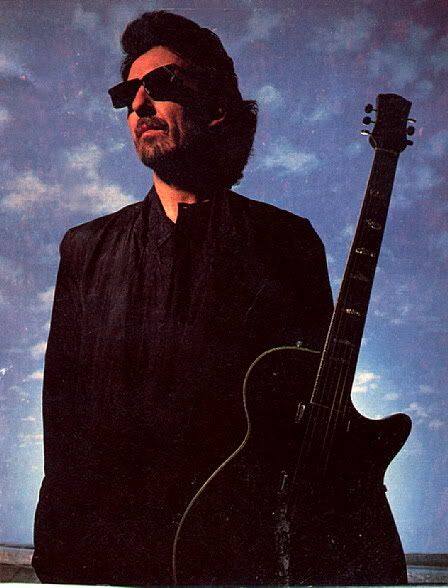
"Everything else can wait but the search for God cannot wait, and love one another"
- George Harrison, 2001
"From the Spiritual Sky,
Such sweet memories have I
To the Spiritual Sky
How I pray
Yes I pray
that I won't get lost
or go astray..."
"George was a giant, a great, great soul, with all of the humanity, all of the wit and humor, all the wisdom, the spirituality, the common sense of a man and compassion for people. He inspired love and had the strength of a hundred men. He was like the sun, the flowers and the moon and we will miss him enormously. The world is a profoundly emptier place without him.''
- Bob Dylan, 2001
From PaleoJudaica.com:
INSCRIPTIONS FROM THE LAND OF ISRAEL is a new online project just getting underway. The description opens:
The Inscriptions from the Land of Israel project seeks to collect and make accessible over the Web all of the previously published inscriptions (and their English translations) from the Land of Israel from the Persian period through the Islamic conquest (ca. 500 BCE - 640 CE). There are about 15,000 of these inscriptions, written primarily in Hebrew, Aramaic, Greek and Latin, by Jews, Christians, and pagans. They range from imperial declarations on monumental architecture to notices of donations in synagogues to humble names scratched on ossuaries, and include everything in between.
I just recieved this in the e-mail & thought I would pass it along. Aish has a high standard of quality, so I don't hesitate to recommend anything the produce:
28 November - 4 December 2004 Weekly Torah Portion: Vayeshev
Announcing the launch of the new Aish.com Shabbat Site:

Featuring hundreds of articles and multi-media, including:
Gimme a Break
One-minute Shabbat film.
Songs and Audio
Popular Shabbat tunes sung by recording artists like Sam Glaser.
Audio: The Beauty of Shabbat
Differentiating between the spiritual reality of Shabbat and the other six days of the week.
It's Still Shabbat
Connecting to Shabbat in the hospital emergency room.
The Holocaust Lights
Thirteen pairs of eyes, huddled in the barracks. The sun has almost set.
Shabbat Fun for Kids
Tried-and-true ways to make Shabbat great for kids.
Coloring Pages about Shabbat
Print-and-enjoy themes of candle-lighting, synagogue, and the family meal.
Challah Recipes
Plus favorite Shabbat foods like soups, chicken, kugel, chollent and dessert!
Shabbat in One Hour
Plus favorite Shabbat foods like soups, chicken, kugel, chollent and dessert!
Blessing the Children
A magic moment of connection for parents and children.
Candle-Lighting Times
Weekly reference for 300 cities worldwide.
LAWS
Self-Study Course
A comprehensive 35-part online self-study course on the "Laws of Shabbat."
From JTS Distance Learning:
P A R A S H A C O M M E N T A R Y
Parashat Va-yishlah 5765
Genesis 32:4 - 36:43
November 27, 2004 14 Kislev 5765
(Reprint, from 5757 )
At first blush there is nothing redeeming about chapter 34 of Genesis. it is a story of rape and revenge full of deceit and brutality. Jacob has returned to the land of Canaan, found his brother Esau to be without grudge for past slights and settled near the city of Shechem with the intent to stay. While on a visit to the city, Dinah, his one daughter, is abducted and raped by the son of the country's ruler, who then falls in love with her and wishes to marry her.
Without returning Dinah, father and son enter into negotiations with Jacob's sons for her hand, offering a generous financial settlement. Jacob's sons ask only that the males of the city undergo circumcision, for the women of their clan are forbidden to marry anyone uncircumcised. Father and son prevail on their fellow citizens in Shechem with a grand vision of union between natives and foreigners. However, three days after the mass surgery, Simeon and Levi, the second and third sons of Jacob, attack the city, killing its convalescing males and seizing its assets, including women and children. Jacob, who has remained strangely silent till now, is mortified by the ruse, but only for fear of reprisal. He departs quickly, without falling victim to the vengeance of the other Canaanite cities in the area.
The dominant motif of this story pervades the book of Genesis: while Canaan is destined to become the home of Abraham's clan, there should be no intermingling with its inhabitants. The assailant of Dinah "committed an outrage in Israel by lying with Jacob's daughter - a thing not to be done (Genesis 34:7)." The spouses of Isaac and Jacob came from Haran, whence Abraham hailed, and not from Canaan. Under no circumstances was Abraham's chief servant to take Isaac back to Haran, but neither was he to arrange a marriage for him with a native Canaanite woman (Genesis 24:3-8). Similarly, the cardinal difference between Jacob and Esau is that the latter takes his wives from among his immediate neighbors to the dismay of his parents (Genesis 26:34, 36:1), though Genesis preserves another tradition that even Esau heeded the aversion (28:6-9).
And in later books of the Torah, the aversion culminates in the sweeping injunction to cleanse Canaan of all its indigenous population at the time of the conquest, a veritable call for genocide. For example, Moses is instructed by God on the steppes of Moab at the end of the 40-year journey through the wilderness: "When you cross the Jordan into the land of Canaan, you shall dispossess all the inhabitants of the land; you shall destroy all their figured objects; you shall destroy all their molten images, and you shall demolish all their cult places (Number 33:51-52)."
In a brilliant article (Prooftexts, January 1990) on chapter 34 of Genesis, Professor Stephen A. Geller of the Seminary has argued forcefully that the Canaanite threat to ancient Israel as imagined by the Bible was an intellectual construct and not a concrete population. "Canaanism" as an idea was construed to be the polar opposite of Israelite monotheism. Whereas the Bible posited a transcendent God without form or gender, "Canaanism" embraced an immanent divinity approachable through child sacrifices, divination and fertility cults. The natural religion of the "Canaanites" especially promoted sexual licentiousness to eliminate the space separating human and divine. In response, ancient Israel transformed circumcision from "a puberty or marriage ritual intended to increase fertility of seed" into a rite of passage at birth "as a 'sign' of the covenantal promise of seed."
Returning to our chapter, Professor Geller writes: "The emblematic rite of circumcision is employed not only for literary effect ('measure for measure') but also to signal the utter religious distinction between Israel and Canaan, focusing on sex. The Shechemites invite Jacob's clan to assimilate through peaceful intercourse, in all senses. To them the demanded ritual still has its older meaning as preparation for marriage. But by using circumcision as a ruse to frustrate that Canaanite enticement, the covenantal author reminds the reader that it is through the Word, not through sex, through transcendence, not immanence, that Israel will take possession of the land."
To this point, I trust that I have made the rape of Dinah at least instructive. It clearly touches on some large issues of biblical theology. But I wish to show also that it exhibits an edifying dimension in the manner in which the story is told. The author drops enough hints here and elsewhere to convey his repugnance at the duplicity and violence of Jacob's sons. Tradition may have imposed on him the choice of subject matter; it could not deny him the freedom to render it with a measure of independence.
First, the narrator tells us at the outset of the plot hatched by Jacob's son that they spoke to the Shechmites "with guile (Genesis 34:13)." Since the story-line would have revealed their true intention soon enough, the elimination of any suspense suggests to me the narrator's note of disapproval.
Second, the sons of Jacob profit handsomely from their dastardly crime, a detail the author would readily have omitted if he meant to exalt the purity of their zeal. Are not female Canaanites as potent a source of religious contamination as males? In the days of Joshua, all plunder of any sort was roundly condemned. Nor would the Jews in Haman's Persia deign to touch the possessions of those Persians whom they killed in self-defense (Esther 9:10,15,16).
Third, the author soon goes on to remind us that sexual perversion is not restricted to the Canaanites. After the death of his beloved Rachel, Jacob is assaulted by the knowledge that Reuben, his first-born, had sexual relations with Bilhah, Rahel's maidservant and Jacob's concubine (Genesis 35:22).
Finally, all moral ambiguity is set aside at the time of Jacob's deathbed testament. The aged patriarch condemns Simeon and Levi with righteous indignation. Their unjustified violence leaves no doubt that they are unsuited for leadership. The narration of chapter 34 thus anticipates the repudiation of chapter 49 in a heartening display of self-criticism.
Shabbat shalom,
Ismar Schorsch
Copyright © 2004 Jewish Theological Seminary
Comments to learn@jts web team.
From Jews for Judaism's responsa:
Question 5: Can you help clarify the Jewish concept of "Satan" for me?
Response
There is a famous Jewish teaching that if you want to find out the true meaning of something, find the first time the word appears in the Bible. The first time a form of the word 'Satan' appears is in Numbers 22:22 where an angel of G-d stood in front of Bilam and his donkey to obstruct them, to block their path. The word "l'satan", therefore, means to be an obstacle, an obstruction, a roadblock, an adversary, etc.
The purpose of Satan and the Satanic force in the world is to obstruct our spiritual progress. Life is supposed to be a path to G-d. If the journey were a breeze, with no challenges, there would be little virtue in succeeding. For example, G-d tells us not to commit adultery. If there were no strong sexual impulse, and if people of the opposite sex looked like sacks of potatoes, there wouldn't be much virtue in being moral. G-d asks us to return the lost objects of people that we may happen to find. If we had no lust for money, then there would be little virtue in returning someone's wallet. The rabbis teach in the Talmud that Satan basically resides inside of us, and it's called the Yetzer Hara (Inclination Toward Evil). The rabbis say that this Satanic force is the greatest blessing that G-d ever gave us! Satan is the loyal opposition. It helps us build our spiritual muscles by giving us resistance to our spiritual progress. If you go to a gym, and lift weights that weigh 6 ounces, you will never build any muscle. The more weight you add, the more resistance, the more muscle you will build. The same is true spiritually. If we didn't have this Satanic force in the world opposing our progress, there would be no opportunity to build our spiritual muscles...
What a totally different understanding of Satan than the Christian one! To them, Satan is not playing on G-d's team. He's the leader of a team that has rebelled against G-d. From a Jewish point of view, Satan is on G-d's team! And even though he tries his hardest to tempt us and detour us, he is ultimately rooting for us to overcome him! He's simply doing his job!
--Rabbi Michael Skobac
From JTS Distance Learning:
P A R A S H A C O M M E N T A R Y
Parashat Va-Yetzei 5765
Genesis 28:10 - 32:3
November 20, 2004 7 Kislev 5765
Why does Jacob abandon the security of his parents home in Beer-sheba? The obvious answer is to flee from the wrath of his brother Esau, whom he has now cunningly stripped of his birthright and paternal blessing. But the end of last week's parashah adds a second motive: to avoid taking a wife from his Canaanite neighbors. The destiny of Jacob's flight is to be the family of his mother in Haran, where hopefully, like his father, he will find a lifelong mate.
The patriarchs exhibit a strong aversion to commingling with the native inhabitants of Canaan. Ishmael marries an Egyptian like his mother Hagar (Genesis 21:21). Abraham, before his death, seeks a wife for Isaac among his own people. And even Esau, who at age forty, greatly displeased his parents by marrying two native Hittite women (Gen. 26:34), later tried to mollify them by taking the daughter of Ishmael as an additional wife (Gen. 28:9).
Indeed, I sense the same aversion in the reaction of Jacob's sons to the rape of their sister Dinah by Shechem, son of Hamor the Hivite (Gen. 34). It is the prospect of wholesale intermarriage between Jacob's clan and the Hivites which prompted Simeon and Levi to exact a retribution that far exceeds the crime committed by Shechem.
How ironic that the one son of Jacob about whom we are specifically told that he found his wife among the Canaanite inhabitants of the land, was none other than Judah (Gen. 38:2), whose name would eventually denote the progeny of Jacob that survives. The force of the verb "left" in the phrase, "About that time Judah left his brothers (Gen. 38:1)" suggests not only a physical departure but also a violation of family mores.
The standard upheld by the patriarchs without any explicit divine exhortation received its legal formulation in the rest of the Torah. Time and again the Israelites are warned to exterminate the seven nations that inhabit the land promised to them. The barbarity of Canaanite culture as evinced in the treatment of Lot's quests by the citizens of Sodom (Gen. 119) would surely contaminate the purity of Israel's faith, if left in place. Deuteronomy lists the nations by name, forbids any thought of matrimony and calls for their eradication. "You must doom them to destruction: grant them no terms and given them no quarter. You shall not intermarry with them... Instead...you shall tear down their altars, smash their pillars, cut down their sacred posts, and consign their images to the fire (Deut. 7:2-5)."
In the same unequivocal tone, Deuteronomy excludes from "the congregation of the Lord" forever any descendant of the nations of Moab and Ammon, because of what they did to Israel in the wilderness (Deut. 23:4-7). Less harshly, Deuteronomy countenances the admission of Edomites and Egyptians in the third generation (Deut. 23:8-9), because one was a brother (descended from Ishmael) and the other hosted Israel on its land for centuries.
I raise this malevolent legislation not to ask whether it was ever carried out, but rather to show how it was overcome by rabbinic Judaism. That the weight of biblical evidence favors the view that such genocidal policy was never implemented (see Judges 1:21-23, Kings 9:20-21) would not alone have set aside its validity. In fact, a striking incident from the early days of the Second Temple period reveals just how potently and painfully it remained in force. In the middle of the fifth century BCE, the priest-scribe Ezra led a contingent of exiled Jews back from Babylonia to Jerusalem. Armed with a letter of authority from the Persian king, he assumed the leadership of a nascent and vulnerable community anchored in a very modestly reconstructed temple. To his dismay, he learned that intermarriage with the local population was rife, especially among the elite circles of Jerusalem. His officers reported: "The people of Israel and the priests and Levites have not separated themselves from the peoples of the land whose abhorrent practices are like those of the Canaanites, the Hittites, the Perizzites, the Jebusites, the Ammonites, the Moabites, the Egyptians, and the Amorites (Ezra 9:1)."
The language implies an expansion of the notion of excluded nations. It is not ethnicity that defines the seven original settler nations of Israel, but cultural mores. Decadence is the common denominator, and Ezra demands and achieves a wholesale expulsion of foreign wives and their children from the community. (Judaism had not yet developed the concept and ritual of religious conversion by which sincere outsiders could be admitted into the community.
By the time the Pharisees and Rabbis, Ezra's spiritual heirs, came to power after the destruction of the Second Temple, Judaism had become a missionizing world religion, constituting as much as one-tenth of the population of the Roman Empire. To maintain the Deuteronomic legacy, especially in Palestine, would have severely impeded access to Judaism for prospective converts in a world turned cosmopolitan. Who could be sure that an interested gentile was not a descendant of one of the proscribed nations?
Hence, in two cases of conversion in the decades after 70 CE, Rabbi Yehoshua ben Hananiah and Rabbi Akiva separately dared to set aside the restrictions of the Torah. History had overturned their relevance, they argued. The nations listed by the Torah were no longer identifiable because they no longer lived on their ancestral lands. The Assyrian King Sennacherib (705-681 BCE) had defeated and dispersed them in the course of his many military campaigns throughout the Fertile Crescent with the result, according to Rabbi Akiva, that today, "an Ammonite man will marry an Egyptian woman, and an Egyptian man will marry an Ammonite woman, and one of them will marry someone from any nation on earth, and someone from any nation on earth will marry one of them." Later authorities accepted the joint view of Rabbis Yehoshua and Akiva as normative by adding the assumption that given this state of ethnic intermingling, every convert is deemed to come from the nationality that dominates the region in which he or she might live (and not from one of the proscribed nations).
With a single bold exegetical gambit, Rabbi Yehoshua and Rabbi Akiva devalue the genocidal content of scripture. By contextualizing the laws pertaining to the seven nations, they relativized their validity. The book of Joshua, with its alleged annihilation of the seven nations, became no more than a historical test, not a prescription for contemporary policy. Since in Judaism, divine revelation is subordinate to human interpretation, the history of Jewish exegesis records the evolution of Judaism's moral conscience. This means that responsibility, courage and compassion are as important in the study of Torah, as are learning and observance.
Shabbat shalom,
Ismar Schorsch
Copyright © 2004 Jewish Theological Seminary
Comments to learn@jts web team.
And old joke, but one worth repeating:
The chief rabbi of Israel visits the Vatican. The Pope
shows him all the beautiful artwork and the religious
treaures, and the rabbi notices in one corner, in a
special case, is a rather elaborate telephone. "That,"
says the Pontif, "is our means of direct
communication with God? Would you like to give
him a call? It's $10,000 per minute."
The rabbi passes on the offer, but a few months later
the Pope visits Israel, and in the rabbi's office
notices a very simple phone sitting on a cushion in
one corner. "That's our phone for talking to God,"
says the rabbi. "Would you like to make a call?"
"I don't have $10,000 on me just at the moment,"
says the Pope.
"Not a problem," says the rabbi. "It's a local call."
"It is an act of evil to accept the state of evil as either inevidable or final"
- Rabbi Abraham Joshua Heschel
The Prophets, 1969
From Biblical Theology:
Readers may be interested to know that the Dead Sea Scrolls Bible (in Hebrew) is planned for publication the summer of 2005. Two years ago while at the CBA meeting in San Francisco, Eugene Ulrich mentioned (when I asked him if there were any plans for such a thing) that yes, indeed, there were. I had not thought of it again until a few days ago so I wrote him and sure enough, its in the works. Here is what he said: There will be two forms (I hope). One is THE QUMRAN BIBLE which is basically BHS but with (only those parts of) the text as preserved at Qumran (only). Probably by Oxford U. P. The second is THE BIBLICAL QUMRAN SCROLLS which is the transcriptions + variants (only) of all the biblical fragments as in DJD, in biblical order. Probably by Brill.
I am sure these volumes will become very significant and thus I feel certain that others would appreciate the "heads up" so they can watch for publication announcements.
From Reb Lazer's Shtibble:

If you believe that the waters of the Sea of Galilee are wet, then believe that Hashem accepts our sincere efforts of Tshuva with open arms. That's enough to make anyone happy.
This is a desktop wallpaper I created using pictures from the gallery @ The Temple Institute's website. Click on the image for the full sized version.

From the JTS Distance Learning Project:
P A R A S H A C O M M E N T A R Y
Parashat Tol'dot 5765
Genesis 25:19-28:9
November 13, 2004 29 Heshvan 5765
This is a reprint of Dr. Schorsch's commentary from 5757 In rabbinic parlance, water stands for Torah. The association is basic and self-evident: both are life-giving elements. As water sustains organic life, so Torah nourishes Jewish life. Thus when Isaiah calls out, "Ho, all who are thirsty, come for water, even if you have no money (Isaiah 55:1)," the Rabbis take his words as an invitation to enter the world of Torah.
The bedrock of synagogue practice, the regular reading of the Torah rests on this analogy. No more than three days are to go by without a public recitation of Scripture. According to the narrative of Exodus, after crossing the Sea of Reeds, the people of Israel wander in the wilderness for three days without any sign of water, quickly erasing any memory of previous miracles and leading to popular unrest (Exodus 15:22). The Talmud treats the episode metaphorically: Three days without exposure to any word of Torah was more than Israel could endure. And so, at some point, prophetic leadership established the custom of reading from the Torah liturgically, not only on Shabbat morning, but also on Shabbat afternoon and on Monday and Thursday mornings. The very day we complete one parashah in the morning, we start the next one in the afternoon and do so twice more during the week. To be removed from Torah is as fatal as a drought.
The identity of water and Torah is a rabbinic analogy, but offers a clue to interpreting an obscure fragment in the life of Isaac. Though our parashah bears the name "This is the story of Isaac," it recounts tantalizingly little about his adult life. Yet the Torah deems it fitting to devote a half-dozen verses (Genesis 26:17-22) to tell us of Isaac's efforts to restore to working order the wells built by his father. "Isaac dug anew the wells which had been dug in the days of his father Abraham and which the Philistines had stopped up after Abraham's death; and he gave them the same names that his father had given them" (26:18). The Philistines, in whose territory Isaac resided at the time, tried to block his plan, but he managed to reactivate at least three wells - and perhaps a fourth (26:32).
Commentators, both old and new, have stayed away from the passage. Its prosaic quality appears to add little to the biography of Isaac. I would like to suggest that the meaning of the fragment inheres in its implicit rather than explicit content. The episode points to the loyalty of Isaac to his father's legacy. Isaac does not merely reside where his father once lived nor drink from the same water, but, more importantly, abides by the teachings his father embodied. The imagery of a son seeking to reappropriate the wells that sustained his father resonates with symbolic overtones of healing a grievous breach. It is no accident that the first time Isaac perceives the God who addresses him as the God of his father occurs directly after the restoration of the wells (26:24).
There is much in the Torah's narrative to imply that Isaac's loyalty to the faith of his father was badly strained by the ordeal of the "binding" at Mount Moriah. For one, Isaac does not return to Beersheba with Abraham (22:19). Had the concord and intimacy of their relationship been ruptured? Second, Isaac mourns intensely when Sarah dies, remaining inconsolable until Rebecca enters his life (24:67). Did he, perhaps, attribute her death after the "binding," as the midrash does, to the unfathomable behavior of Abraham? Had he taken shelter in her protective love, rather than his father's? Third, after his sons are born, Isaac prefers Esau, "a skilled hunter, a man of the outdoors" (25:27), who scarcely exhibits any interest in such matters as justice and righteousness that we identify with Abraham (18:19).
The tale of the wells is intended to modify that impression. Isaac did not remain permanently estranged from the faith of his father. He struggled to overcome the scars of his terror, to understand the silent anguish of his impervious father and the meaning of that searing event. He returned to remove the debris, which had covered and contaminated the wells, so that he might drink again from their sacred water.
But to internalize that legacy, he needed to prune it of its overwrought accretions, to regain its balance and integrity, to make it work for him. The philistines of every generation seek to curb the protean character of a healthy tradition. Transmission is a dynamic, interactive process governed by both responsiveness and reverence. The custodians of tradition must feel the pain of the faithful even as they heed the voice of God.
No one has caught the creative spirit of this dialectical relationship more sharply than the incomparable German writer Goethe: "What you have inherited (passively) from your ancestors, take hold of it (actively) in order to make it your own."
Shabbat shalom,
Ismar Schorsch
The publication and distribution of Dr. Schorsch's commentary on Parashat Tol'dot are made possible by a generous grant from Rita Dee and Harold (z"l) Hassenfeld.
Copyright © 2004 Jewish Theological Seminary
Comments to learn@jts web team.
From Honest Reporting.com via Smooth Stone:
From PRIMER:
Urge media not to whitewash Atafat's involvement with terrorism
The media is focusing much attention on Yasir Arafat's legacy. Many of the historical briefs and timelines that will be published after his death will undoubetly whitewash his decades-long involvement in terrorism. While they note that Arafat led Fatah and the PLO, the terrorist acts committed by these groups are often ignored.
Urge our local media to report on Arafat's history objectively. Insist that they include his decades-long involvement in terror, his goal of destroying Israel, and his siphoning of hundreds of millions of dollars from money donated to help the Palestinian people that went instead into his own private accounts.
Key Dates in the life of Yasir Arafat,
known to many as the "father of modern terrorism"
(prepared by www.camera.org)
-- Aug 4, 1929: Arafat born in Cairo. Muhammad Abdel Rahman Abdel Rauf al-Qudwa al-Husseini is fifth child of prosperous merchant, Abdel Raouf al-Qudwa al-Husseini.
-- 1933 : Arafat's mother dies. He and his infant brother are sent to live with uncle in Jerusalem.
-- 1948: Arafat runs arms to Palestine.
-- Late 1950s: Arafat co-founds Fatah, the "Movement for the National Liberation of Palestine."
-- Jan. 1, 1965: Fatah's first attempted attack in Israel fails. They had attempted to bomb the National Water Carrier.
-- July 5, 1965: A Fatah cell planted explosives at Mitzpe Massua, near Beit Guvrin; and on the railroad tracks to Jerusalem near Kafr Battir.
-- 1965-1967: Numerous Fatah bomb attacks target Israeli villages, water pipes, railroads. Homes are destroyed and Israelis are killed.
-- July 1968: Fatah joins and becomes the dominant member of the PLO, an umbrella organization of Palestinian terrorist groups.
-- Feb. 4, 1969: Arafat appointed Chairman of the Executive Committee of the PLO
-- Feb. 21, 1970: SwissAir flight 330, bound for Tel Aviv, bombed by PLO-group PFLP in mid-flight, killing 47.
--Sept. 6, 1970: TWA, Pan-Am, and BOAC airplanes hijacked by PLO terrorists.
-- September 1970: In operation known as "Black September," Jordanian forces battle PLO, driving them out of Jordan, after the group's violent activity threatened to destabilize the kingdom. The terrorists flee to Lebanon.
-- Sept. 5, 1972: 11 Israeli athletes killed at the Munich Olympics by PLO-affiliated terrorists.
-- March 1, 1973 : Palestinian terrorists take over Saudi embassy in Khartoum. The next day, two Americans (including the United States' ambassador to Sudan, Cleo Noel) and a Belgian were shot and killed. James J. Welsh, an analyst for the National Security Agency from 1969 through 1974, charged Arafat with direct complicity in these murders.
-- April 11, 1974: 18 residents of Kiryat Shmona in Israel killed in their apartment building by Palestinian terrorist who infiltrated from Lebanon.
-- May 15, 1974: School in Ma'alot attacked by Palestinian terrorists who infiltrated from Lebanon. 26 Israelis, including many children, were killed.
-- June 9, 1974 : Palestinian National Council adopts "Phased Plan," which calls for the establishment of a Palestinian state on any territory evacuated by Israel, to be used as a base of operations for destroying the whole of Israel. The PLO reaffirmed its rejection of United Nations Security Council Resolution 242, which calls for a "just and lasting peace" and the "right to live in peace within secure and recognized boundaries free from threats or acts of force."
--Nov. 13, 1974: Arafat, wearing a gun, addresses U.N. General Assembly
-- 1982: Having created a terrorist mini-state in Lebanon destabilizing that nation, PLO expelled after Israel responds to incessant PLO missile attacks against northern Israeli communities. Arafat relocates to Tunis.
-- Oct. 7, 1985 : Italian cruise ship Achille Lauro hijacked by Palestinian terrorists. Wheelchair-bound elderly man, Leon Klinghoffer, was shot and thrown overboard. Intelligence reports note that instructions originated from Arafat's headquarters in Tunis.
--Dec. 12, 1988: Arafat claims to accept Israel's right to exist.
-- Sept. 1993: Handshake with Israeli Prime Minister Rabin, inaugurating the Oslo Accords. Arafat pledged to stop incitement and terror, and to foster co-existence with Israel, but failed to comply.
Throughout the years of negotiations, aside from passing, token efforts, Arafat does nothing to stop Hamas, PFLP, and Islamic Jihad from carrying out thousands of terrorist attacks against Israeli civilians. With Arafat's encouragement and financial support, groups directly under Arafat's command, such as the Tanzim and Al Aqsa Martyrs Brigade, also carry out terror attacks.
-- Oct. 21, 1996: Speaking at a rally near Bethlehem, Arafat said "We know only one word - jihad. Jihad, jihad, jihad. Whoever does not like it can drink from the Dead Sea or from the Sea of Gaza." (Yediot Ahronot, October 23, 1996)
-- April 16, 1998: In a statement published in the official Palestinian Authority newspaper Al-Hayat Al-Jadeeda, Arafat is quoted: "O my dear ones on the occupied lands, relatives and friends throughout Palestine and the diaspora, my colleagues in struggle and in arms, my colleagues in struggle and in jihad...Intensify the revolution and the blessed intifada...We must burn the ground under the feet of the invaders."
-- July 2000: Arafat rejects peace settlement offered by Israeli Prime Minister Ehud Barak, which would have led to a Palestinian state.
-- Sept 2000: New "intifada" is launched. Arafat continues to incite, support and fund terrorism.
Below are some of the attacks since Sept 2000 perpetrated by groups under Arafat's command:
-- May 29, 2001: Gilad Zar, 41, of Itamar, was shot dead in a terrorist ambush by Fatah Tanzim.
-- May 29, 2001: Sara Blaustein, 53, and Esther Alvan, 20, of Efrat, were killed in a drive-by shooting south of Jerusalem. The Fatah Tanzim claimed responsibility for the attack.
-- June 18, 2001: Doron Zisserman, 38, shot and killed in his car by Fatah sniper fire.
-- Aug 26, 2001: Dov Rosman, 58, killed in a shooting attack by Fatah terrorist.
-- Sept 6, 2001: Erez Merhavi, 23, killed in a Fatah Tanzim ambush shooting near Hadera while driving to a wedding.-- Sept 20, 2001: Sarit Amrani, 26, killed by Fatah terrorist snipers as she was traveling in a car with her husband and 3 children.
-- Oct 4, 2001: 3 killed, 13 wounded, when a Fatah terrorist, dressed as an Israeli paratrooper, opened fire on Israeli civilians waiting at the central bus station in Afula.
-- Nov 27, 2001 - 2 killed 50 injured when two Palestinian terrorists opened fire with Kalashnikov assault rifles on a crowd of people near the central bus station in Afula. Fatah and the Islamic Jihad claimed joint responsibility.-- Nov 29, 2001: 3 killed and 9 wounded in a suicide bombing on an Egged 823 bus en route from Nazereth to Tel Aviv near the city of Hadera. The Islamic Jihad and Fatah claimed responsibility for the attack.
-- Dec 12, 2001 - 11 killed and 30 wounded when three terrorists attacked a bus and several passenger cars with a roadside bomb, anti-tank grenades, and light arms fire near the entrance to Emmanuel in Samaria . Both Fatah and Hamas claimed responsibility for the attack.-- Jan. 3, 2002: Israelis intercept the Karine-A, a ship loaded with 50 tons of mortars, rocket launchers, anti-tank mines and other weapons intended for the Palestinian war against the Israelis. The captain admits he was under the command of the Palestinian Authority.
--Jan 15, 2002: Avi Boaz, 71, an American citizen, was kidnapped at a PA security checkpoint in Beit Jala. His bullet-riddled body was found in a car near Bethlehem. The Fatah's Al-Aksa Brigade claimed responsibility for the murder.--Jan 15, 2002: Yoela Chen, 45, was shot dead by an Al Aqsa Brigade terrorist
-- Jan 17, 2002: 6 killed, 35 wounded when a Fatah terrorist burst into a bat mitzva reception in a banquet hall in Hadera opening fire with an M-16 assault rifle.
-- Jan 22, 2002: 2 killed, 40 injured when a Fatah terrorist opened fire with an M-16 assault rifle near a bus stop in downtown Jerusalem.
-- Jan. 27, 2002: One person was killed and more than 150 were wounded by a female Fatah suicide bomber in the center of Jerusalem.
-- Feb 6, 2002 - A mother and her 11 year old daughter were murdered in their home by a Palestinian terrorist disguised in an IDF uniform. Both Fatah and Hamas claimed responsibility.
-- Feb 18, 2002 : - Ahuva Amergi, 30, was killed and a 60-year old man was injured when a Palestinian terrorist opened fire on her car. Maj. Mor Elraz, 25, and St.-Sgt. Amir Mansouri, 21, who came to their assistance, were killed while trying to intercept the terrorist. The terrorist was killed when the explosives he was carrying were detonated. The Fatah al-Aqsa Martyrs Brigades claimed responsibility for the attack.
-- Feb 22, 2002: Valery Ahmir, 59, was killed by terrorists in a Fatah drive-by shooting north of Jerusalem as he returned home from work.-- Feb 25, 2002: Avraham Fish, 65, and Aharon Gorov, 46, were killed in a Fatah terrorist shooting attack south of Bethlehem. Fish's daughter, 9 months pregnant, was seriously injured but delivered a baby girl.
-- Feb 25, 2002: Police officer 1st Sgt. Galit Arbiv, 21, died after being fatally shot, when a Fatah terrorist opened fire at a bus stop in the Neve Ya'akov residential neighbhorhood in northern Jerusalem. Eight others were injured.
-- Feb 27, 2002: Gad Rejwan, 34, of Jerusalem, was shot and killed by one of his Palestinian employees in a factory north of Jerusalem. Two Fatah groups issued a joint statement taking responsibility for the murder.
-- March 2, 2002: A suicide bombing by Al Aqsa Martyrs Brigade in an ultra-Orthodox Jewish neighborhood of Jerusalem killed 11 people and injured more than 50.
-- Mar 5, 2002: 3 were killed and over 30 people were wounded in Tel-Aviv when a Fatah terrorist opened fire on two adjacent restaurants shortly after 2:00 AM.
-- Mar 5, 2002: Devorah Friedman, 45, of Efrat, was killed and her husband injured in a Fatah shooting attack on the Bethlehem bypass "tunnel road", south of Jerusalem.
-- Mar 9, 2002: Avia Malka, 9 months, and Israel Yihye, 27, were killed and about 50 people were injured when two Fatah terrorists opened fire and threw grenades at cars and pedestrians in the coastal city of Netanya on Saturday evening, close to the city's boardwalk and hotels.
--March 21, 2002: An Al Aqsa Martyrs Brigade suicide bomber exploded himself in a crowd of shoppers in Jerusalem, killing 3 and injuring 86.
-- March 29, 2002: Two killed and 28 injured when a female Fatah suicide bomber blew herself up in a Jerusalem supermarket.
-- March 30, 2002: One killed and 30 injured in an Al Aqsa Martyrs Brigade suicide bombing in Tel Aviv.
-- April 12, 2002: Six killed and 104 wounded when a female Al Aqsa Martyrs Brigade suicide bomber blew herself up at a bus stop on Jaffa road at the entrance to Jerusalem's Mahane Yehuda open-air market.
-- May 27, 2002: Ruth Peled, 56, of Herzliya and her infant granddaughter, aged 14 months, were killed and 37 people were injured when a Fatah suicide bomber detonated himself near an ice cream parlor outside a shopping mall in Petah Tikva.
-- May 28, 2002 - Albert Maloul, 50, of Jerusalem, was killed when shots were fired by Fatah terrorists at the car in which he was traveling south on the Ramallah bypass road.
-- May 28, 2002 - Al Aqsa Martyrs Brigade terrorists killed Netanel Riachi, 17, Gilad Stiglitz, 14, and Avraham Siton, 17, three yeshiva high school students playing basketball.-- June 19, 2002: Seven people were killed and 37 injured when a Fatah suicide bomber blew himself up at a crowded bus stop and hitchhiking post in the French Hill neighborhood of Jerusalem.
-- June 20, 2002: Rachel Shabo, 40, and three of her sons - Neria, 16, Zvika, 12, and Avishai, 5 - as well as a neighbor, Yosef Twito, 31, who came to their aid, were murdered when a terrorist entered their home in Itamar, south of Nablus, and opened fire. Two other children were injured, as well as two soldiers. The PFLP and the Fatah Al Aqsa Brigades claimed responsibility for the attack.-- July 25, 2002: Rabbi Elimelech Shapira, 43, was killed in a Fatah shooting attack near the West Bank community of Alei Zahav.
-- July 26, 2002: St.-Sgt. Elazar Lebovitch, 21, of Hebron; Rabbi Yosef Dikstein, 45, of Psagot, his wife Hannah, 42, and their 9-year-old son Shuv'el Zion were killed in a Fatah Al Aqsa Brigade shooting attack south of Hebron. Two other of their children were injured.
-- July 30, 2002: Shlomo Odesser, 60, and his brother Mordechai, 52, both of Tapuach in Samaria, were shot and killed when their truck came under Fatah fire in the West Bank village of Jama'in.
-- Aug 4, 2002: 2 killed and 17 wounded when a Fatah terrorist opened fire with a pistol near the Damascus Gate of Jerusalem's Old City.-- Aug 5, 2002: Avi Wolanski (29) and his wife Avital (27), of Eli, were killed and one of their children, aged 3, was injured when terrorists opened fire on their car as they were traveling on the Ramallah-Nablus road in Samaria. The Martyrs of the Palestinian Popular Army, a splinter group associated with Arafat's Fatah movement, claimed responsibility for the attack.
-- Aug 10, 2002: Yafit Herenstein, 31, of Moshav Mechora in the Jordan Valley, was killed and her husband, Arno, seriously wounded when a Fatah terrorist infiltrated the moshav and opened fire outside their home.
-- Sept 18, 2002: Yosef Ajami, 36, was killed when Fatah terrorists opened fire on his car near Mevo Dotan, north of Jenin in the West Bank.
-- Oct 29, 2002: Three people, including 2 fourteen year olds, were shot to death by a Fatah terrorist.
-- Nov 10, 2002: Revital Ohayon, 34, and her two sons, Matan, 5, and Noam, 4, as well as Yitzhak Dori, 44 - all of Kibbutz Metzer - and Tirza Damari, 42, were killed when a Fatah terrorist infiltrated the kibbutz, located east of Hadera near the Green Line, and opened fire.
-- Nov 28, 2002: 5 killed and 40 wounded when two Fatah terrorists opened fire and threw grenades at the Likud polling station in Beit She'an, near the central bus station, where party members were casting their votes in the Likud primary.-- Apr 24, 2003 - 1 was killed and 13 were wounded in a suicide bombing outside the train station in Kfar Sava. Groups related to the Fatah al-Aqsa Martyrs Brigades and the PFLP clamied joint responsibility for the attack.
recognizing anti-Israel media bias
-- May 5, 2003 - Gideon Lichterman, 27, was killed and two other passengers, his six-year-old daughter Moriah and a reserve soldier, were seriously wounded when Fatah terrorists fired shots at their vehicle in Samaria.
-- May 19, 2003: 3 were killed and 70 were wounded in a suicide bombing at the entrance to the Amakim Mall in Afula. The Islamic Jihad and the Fatah al-Aqsa Martyrs Brigades both claimed responsibility for the attack.
-- Aug 29, 2003: Shalom Har-Melekh, 25, was killed in a Fatah shooting attack while driving northeast of Ramallah. His wife, Limor, who was seven months pregnant, sustained moderate injuries, and gave birth to a baby girl by Caesarean section.
-- Jan 29, 2004: 11 people were killed and over 50 wounded in a suicide bombing of an Egged bus no. 19 at the corner of Gaza and Arlozorov streets in Jerusalem. Both the Fatah-related Al Aqsa Martyrs' Brigades and Hamas claimed responsibility for the attack.
-- Mar 14, 2004: 10 were killed and 16 wounded in a double suicide bombing at Ashdod Port. Hamas and Fatah claimed responsibility for the attack.
-- May 2, 2004: Tali Hatuel, 34, and her daughters - Hila, 11, Hadar, 9, Roni, 7, and Merav, 2 - of Katif in the Gaza Strip were killed when two Palestinian terrorists fired on an Israeli car at the entrance to the Gaza Strip settlement bloc of Gush Katif. Fatah and Islamic Jihad claimed joint responsibility for the attack.
From Chabad.org's Daily Dose mailing list:
B"H


Infinity

--------


G-d is not just big -- He is infinite. If He were only "big", then those things that are small would be further from Him and those things that are big would be closer. But to the Infinite, big and small are irrelevant terms. He is everywhere and He is found wherever He wishes to be found.
Today, 9 November 2004, is the 128th anniversary of the birth of Archibald Wright "Moonlight" Graham. Graham was on the roster of the 1905 New York Giants for a single game. He had no at bats and never played in the field. His entry in the Baseball Almanac stands out by its lack of numbers:
Moonlight Graham Hitting Statistics | ||||||||||||||||||
| | G | AB | R | H | 2B | 3B | HR | RBI | BB | IBB | SO | SH | SF | HBP | GIDP | AVG | OBP | SLG |
| 1905 Giants | 1 | 0 | 0 | 0 | 0 | 0 | 0 | 0 | 0 | - | - | 0 | - | 0 | - | .000 | .000 | .000 |
| | G | AB | R | H | 2B | 3B | HR | RBI | BB | IBB | SO | SH | SF | HBP | GIDP | AVG | OBP | SLG |
| | 1 | 0 | 0 | 0 | 0 | 0 | 0 | 0 | 0 | - | - | 0 | - | 0 | - | .000 | .000 | .000 |